
CPA San AntonioThe month needs one owner
January happened, and the books person and the return person each thought the other one closed it. The month needs one owner. Payday stays on your provider. We close the months, then write the return once the bank agrees, so January is not between two people. Steven Palmieri does this as a Tax CFO, the Entrepreneur's CFO, so the month that sat between two people gets one name.
We are all Texans. The practice is in Dallas and San Antonio owners meet us on a video call.

Pearl opened as a brewery in 1883 and went quiet in 2001. A closed chapter still has a ledger. A finished month gets that same question.
Name the open month
Say which month never got a close.

You will be talking to the Steven Palmieri practice.

Kept care
A month that looks kept: the bank and the books agree, and the care shows. King William sits south of downtown on old mission farmland, houses kept so the care shows; a month should look kept the same way.
Click to see the month ›Tap to see the month ›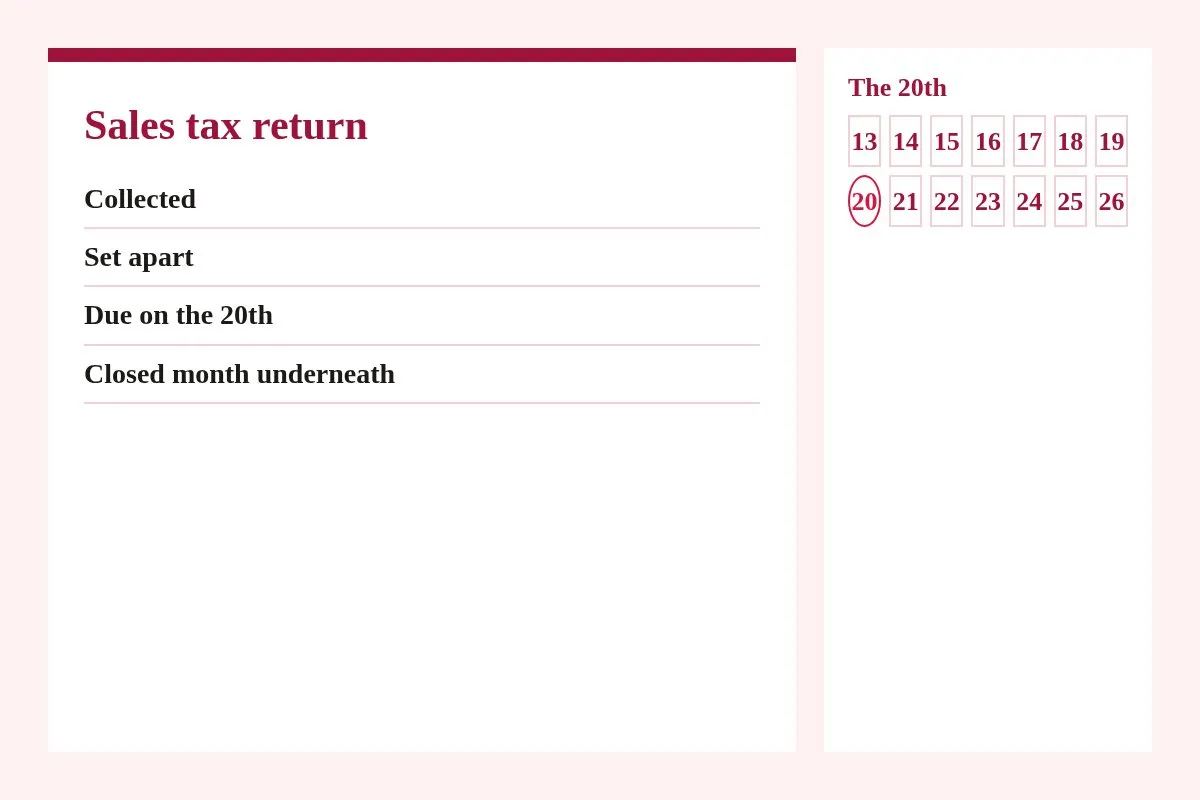
The 20th
A loud February still has a 20th: the sales tax return needs a closed month, whatever is on the calendar.
Click to see levies ›Tap to see levies ›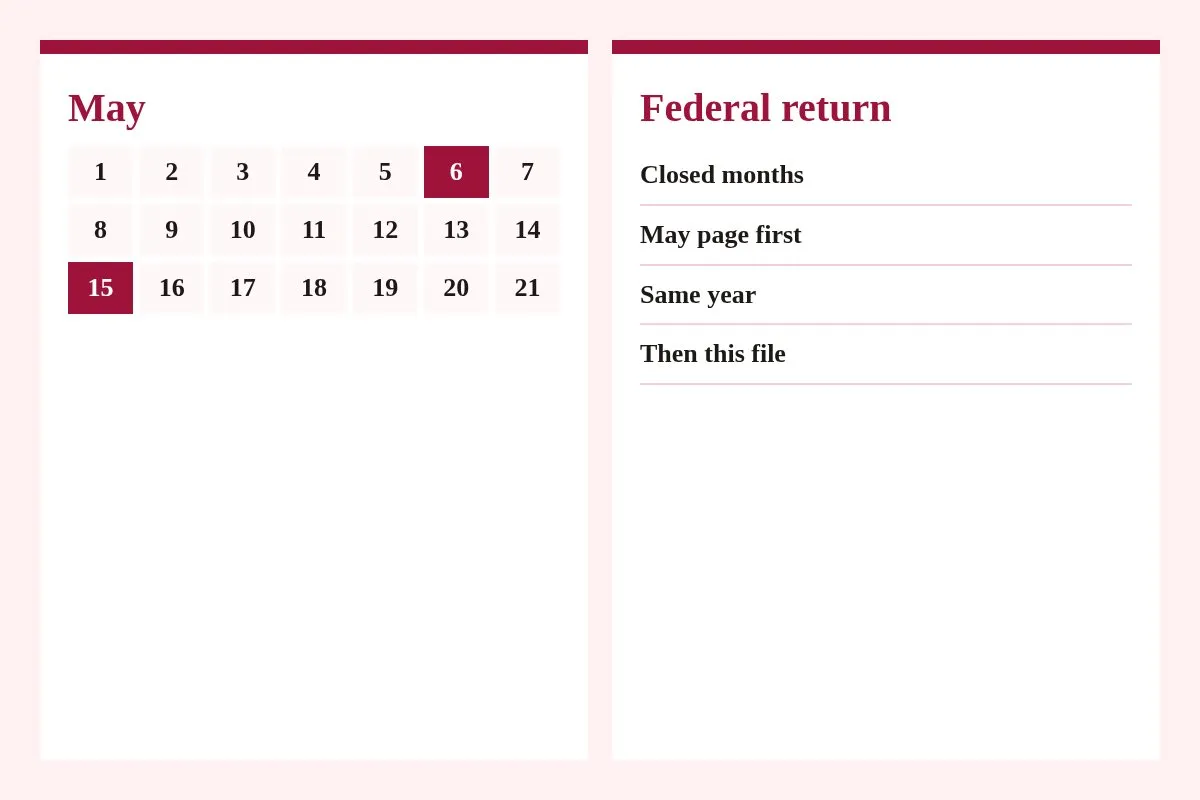
The May report
May is a date the city already knows: the franchise report, built from the federal return and closed months.
Click to see the return ›Tap to see the return ›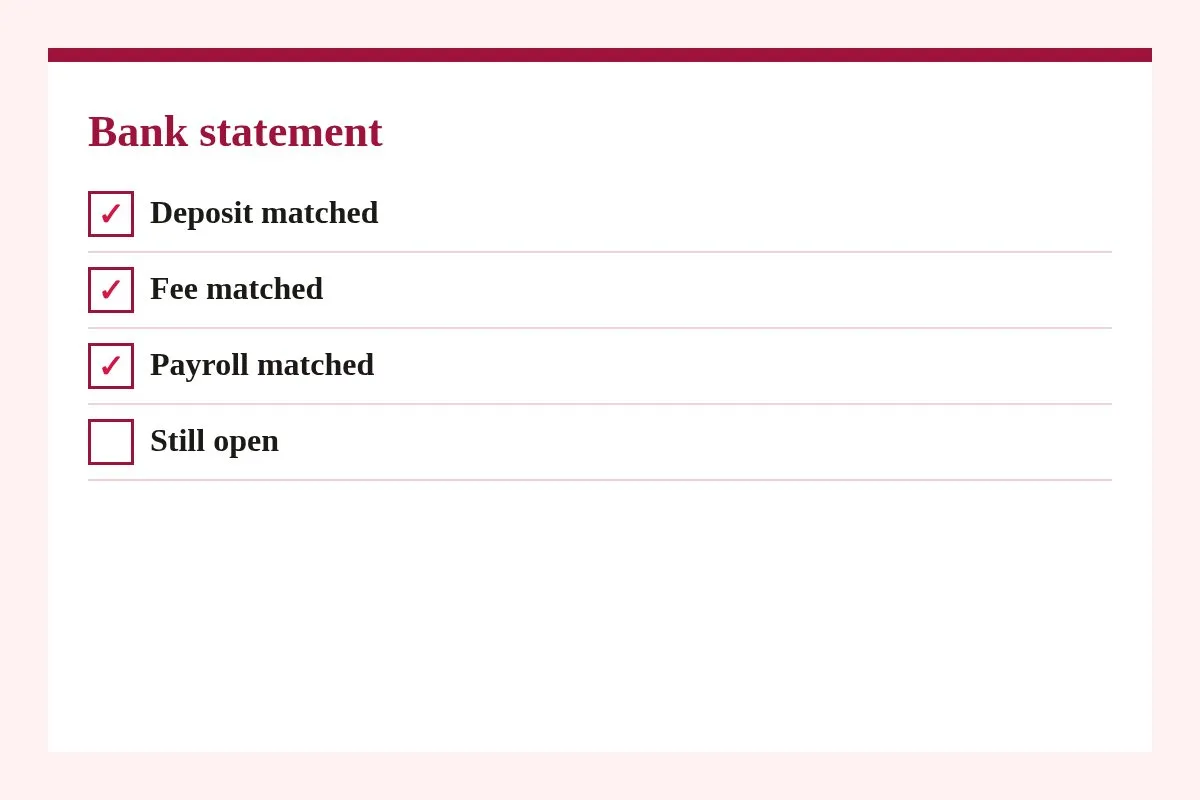
The packet
Payroll reports land in their own month.
Click to see the list ›Tap to see the list ›
Who owns it
Two people, both finished, one month: who owns it is the question we answer first.
Click to see the sketch ›Tap to see the sketch ›Questions
Which month can stay open.
Click to read the answers ›Tap to read the answers ›Six jobs, two homes
Five stay. One signature leaves.
1Match the month to the bank. Stays in the month.
The month is finished when the bank and the books tell the same story, including the items that have not cleared.
That work stays in the month we close and in the return that follows it.
2Set payday up on a provider. Stays in the month.
We open the accounts and the deposit rhythm. Wages continue from the payroll service this company already selected.
That work stays in the month we close and in the return that follows it.
3Prepare the city return from that month. Stays in the month.
Money collected on a sale is not revenue. It waits in the books until the return on the 20th.
That work stays in the month we close and in the return that follows it.
4Build the May franchise page. Stays in the month.
May's franchise page starts only after the bank and the books tell one story for that year. Goods sellers use the smaller of the two margin rates.
That work stays in the month we close and in the return that follows it.
5Prepare the federal return after May. Stays in the month.
The federal file comes after the Texas page exists, so the two years are the same year.
That work stays in the month we close and in the return that follows it.
6Sign an audit, review, or compilation. Leaves this practice.
An assurance signature is the only row we hand to someone else. Disclosures writes that boundary out.
That signature leaves this practice and goes to a firm that can sign it.
Steven Palmieri is our Tax CFO. The bank agrees before January or the return is called finished.
Click to meet the practice ›Tap to meet the practice ›The stuck month
Name the month that is the hole.
You will be talking to the Steven Palmieri practice.
Read the long version
We close the month for owners in this city on a video call, with the books on both screens. Distance does not pick a new day for that close.
The hole has a name, and the name is a month
Picture the week the holidays are over and the city is already talking about February. December got a close from the person who keeps the books. The return has not been started. The person preparing it is still waiting on a year that feels finished. Between those two jobs sits a set of changes that belong in the opening month. If each person believes the other one took them, the year begins with a hole.
The hole is ordinary, and that is what makes it expensive. Nobody was careless. The books person did the books. The return person will do the return. The month where those two jobs are supposed to meet was never written down as anyone's job. We take that month on purpose, in the same practice that will prepare the return, so the handoff is a date on our calendar and not a favor someone might remember in March.
Owners feel this as a low worry that spikes when a letter arrives. The letter names a period. The period is a month nobody is eager to claim. Relief, when it comes, is quiet. The bank matches. The letter has a file behind it. You can see the month, and so can we.
A finished month, told in the order we actually work
We start with the bank. Every deposit and every check in the month has a home in the books, or it stays on a list of items that have not cleared. An uncleared item is not deleted to make the page look tidy. It waits, with a name, until it clears or until you tell us what it was.
Money a customer paid on top of the price is not revenue. It is tax you collected for someone else, and it waits in its own account until the return on the 20th. If that money is mixed into sales, the month can look healthy and still be short on the day the return is due. We split those dollars before we call the month finished.
In this city a taxable sale carries 8.25 percent. The state piece is 6.25, the city piece is 1.125, the transit piece is 0.5, and the transportation district is 0.375. Inside the city piece, 0.125 is the early education share and 1 percent is general. A deposit that looks like one number is several payees. A month with nobody on it is how those payees get counted as a sale.
A payment large enough to use the Comptroller's electronic line has to be started by 8 in the evening on the business day before it is due, on the Central clock this city already runs. The close has to land early enough that the evening is still open. That is one more reason the month needs a name on it.
After the file is set up, payday continues on the provider you already chose. Reports from that provider land in the month they belong to, even when the cash left the bank on a different day. We do not cut the checks. We do post the reports, because a return built on wages that never hit the books is a story the bank will not support.
What you pay yourself shows up on its own line. It does not hide in a miscellaneous pile. A statement we will stand behind names the month and ties to the bank. If the statement and the bank disagree, that month stays open and we name the gap.
The return waits, and October is the month that can still change
We do not start the federal return on a year the bank has not agreed with. Starting with the return and repairing the books afterward is how April turns into a cleanup. The months come first. The Texas page in May comes from those months. The federal file comes after that page exists, so both of them describe the same year.
October is when the conversation is worth having. Estimates can be set from a picture that is already closed, so April is not a shock. While the year is still open, a retirement contribution can still be chosen, and no dollar figure for it appears on this page. When December has closed, the return can only tell the story the year already lived. We would rather you see that picture while a choice can still move it.
You do not need a reception room in the city for any of this. The call is on video. The books are on both screens. You see the same numbers we see, and the close still lands on one day a month.
What stays here, and the one signature that leaves
What you leave with has ordinary names. Closed months. Pay set up on a provider that you continue to operate. Statements and reports you can read. A return built after those agree. An audit, a review, or a compilation is the signature that leaves, and the disclosures page is where that limit is written in full.
When a notice asks for records, we collect the ones that period already holds and help send the reply. We do not stand in for you at a public counter, and we do not appear at an examination in your place. If the letter in your hand wants an assurance report, you will hear that in the first conversation.
The rates a closed month has to carry, the city stack and the school levy and the property tax on a building, live on the levies page. The order of the May page and the federal file lives on the books and return page. This page is the argument. Those pages are the workings.
Rate pages we rely on are the Comptroller sales tax pages, the franchise pages, and the property tax deadline calendar.